
Amsterdam LGBT Friendly: Seen Through Queer Eyes
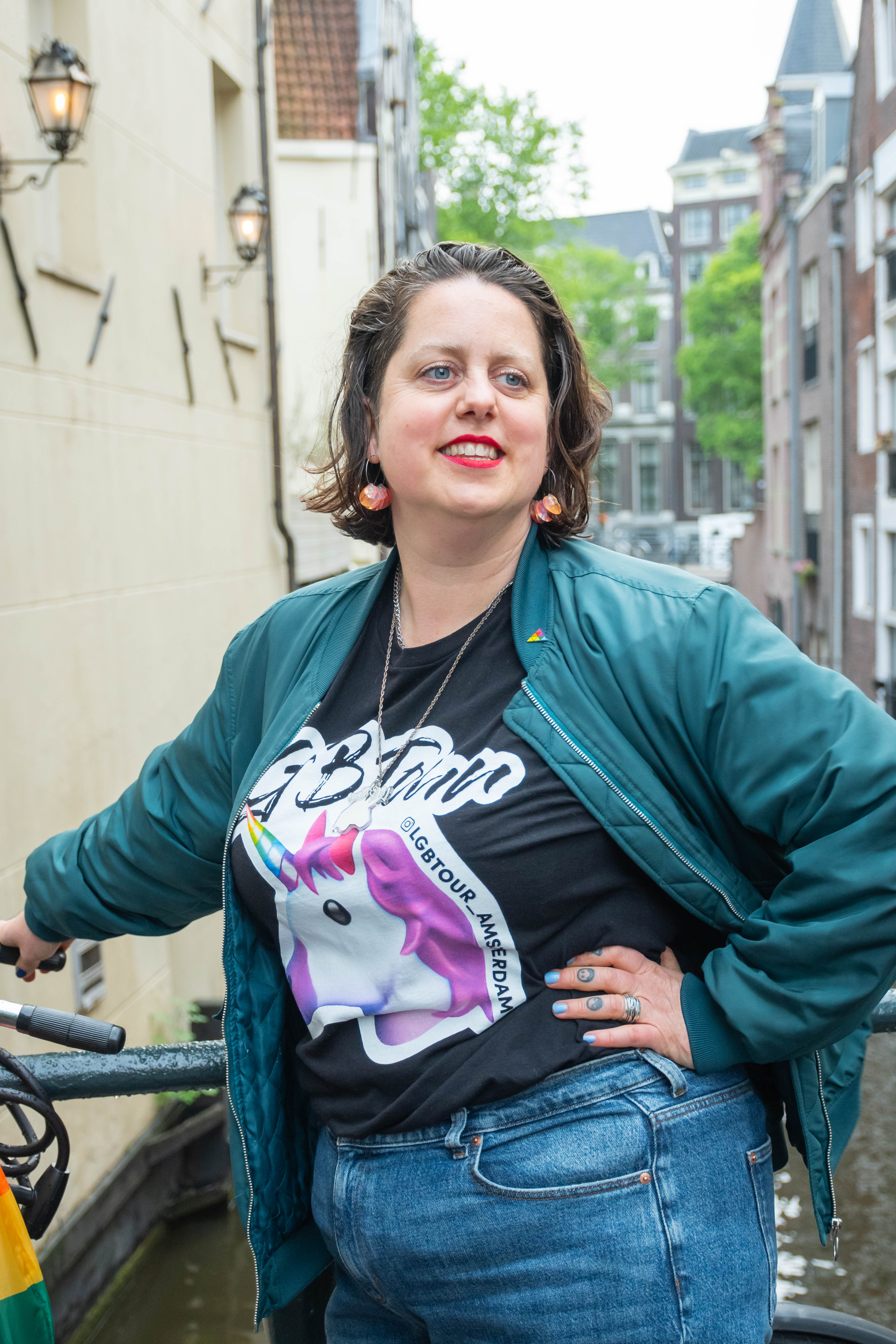
Is Amsterdam LGBT friendly?
It’s one of those questions I hear all the time; usually from travelers who want to believe the answer is yes, but don’t quite trust the rainbow flags in the Instagram photos. And honestly, I get it. Plenty of cities market themselves as queer-friendly without ever asking what that actually feels like for the people who live there.
Here in the Netherlands, the visibility of LGBTQ+ people isn’t just anecdotal. In 2024, the Dutch Central Bureau for Statistics (CBS) published a study estimating that around 2.7 million people in the country identify as lesbian, gay, bi-plus, transgender, queer, intersex, or asexual. To put things in context, LGBTQ+ people represent about 18% of the population aged 15 and older. That’s a significant slice of Dutch society whose existence and experiences are now part of official data for the first time*.
Amsterdam doesn’t need much marketing. Most days, its queerness shows up quietly: in couples holding hands while cycling through traffic, in Pride flags that stay up long after August ends, in conversations that don’t pause when you mention your partner’s pronouns. It’s not perfect, but it’s real, and that’s exactly why it matters.
So let’s talk about what “Amsterdam LGBT friendly” really means, beyond rankings, slogans, and postcard versions of the city.
*This number could even be higher knowing that some people are free not to share this information and many are still in the closet or questioning.
What “LGBT Friendly” Actually Means in Amsterdam
Amsterdam has the credentials. The Netherlands was the first country in the world to legalize same-sex marriage back in 2001, and LGBTQ+ rights are protected by law. Discrimination based on sexual orientation and gender identity is illegal, and same-sex couples are a visible, everyday part of city life.

But legal equality is only the starting point.
What makes Amsterdam feel genuinely LGBT friendly is how unremarkable queerness often is here. That might sound strange, but for many LGBTQ+ travelers, normalcy is a luxury. Being able to exist without explanation, without side-eyes, without feeling like you’re making a statement just by being yourself… that’s where Amsterdam shines.
Queer life here isn’t confined to a single “gay district.” It’s woven into the city’s rhythm, from quiet residential streets to busy cafés and museum queues. You don’t have to search hard to find acceptance; it tends to meet you halfway.
A City Shaped by Queer History (Whether You Notice It or Not)
Amsterdam’s reputation as an LGBT friendly city didn’t appear overnight. It was built through decades of activism, resistance, and community care.
One of the most powerful symbols of this history is the Homomonument, located near Westerkerk. It was the world’s first monument dedicated to LGBTQ+ people persecuted for who they were (e.g.: killed in gas chambers during the Second World War by the Nazis), and it’s still a living place today. Locals gather here not just to remember, but to protest, celebrate, and mourn their peers when necessary.
Amsterdam has long been a city where queer people could organize, publish, and push back. Long before Pride became a global festival, it was a protest here too. That history matters, because it reminds us that today’s freedoms didn’t come from tolerance alone; they came from visibility and courage.
When you walk through the city with that context, Amsterdam feels different. Streets stop being just streets. Buildings hold stories.
Everyday Queer Life in Amsterdam
One of the most common surprises for LGBTQ+ visitors is how low-key queer life can feel here, in the best possible way.
Yes, there are gay bars, vibrant nightclubs, and unmissable parties. But queer Amsterdam also lives in bookstores, queer-owned stores, community centers, cozy cafés, and casual meetups. It shows up in neighborhoods where Pride flags hang next to baby strollers and houseplants, not because it’s trendy, but because it’s home.
People tend to mind their own business here. That Dutch directness you may have heard about? It works in queer people’s favor. There’s less performative acceptance and more straightforward respect. You’re allowed to be complex, contradictory, still figuring things out.
For many queer people who move here (or even just pass through), Amsterdam feels like a place where you can exhale.
Is Amsterdam LGBT Friendly for Everyone?
Here’s where honesty matters.
Amsterdam is progressive, but it is not immune to inequality. Experiences differ depending on race, gender identity, class, visibility, and whether someone is trans or non-binary. Microaggressions exist. Systems still fail people. Some voices are heard more easily than others.
At the same time, Amsterdam has strong queer networks, visible activism, and a culture of public debate. Problems are increasingly named, challenged, and discussed rather than quietly ignored. That willingness to self-critique is part of what keeps the city moving forward.
Being LGBT friendly isn’t about perfection. It’s about whether a city is willing to listen… and change.
Pride in Amsterdam: Between Celebration, Commerce, and Resistance
Amsterdam Pride is world-famous, and not without reason. The canal parade is visually spectacular, unapologetically public, and deeply woven into the city’s identity. Boats float past historic houses, crowds line the quays, and for a few days queerness becomes impossible to ignore. Visibility matters, and in that sense, Pride still plays an important role.

But if you talk to queer locals, especially those who have been around for a while, you’ll often hear a more complicated story.
Over the years, Pride Amsterdam has become highly polished; professional, well-branded, and undeniably commercial. For many queer people, that polish comes at a cost. The event increasingly feels shaped by sponsors, city branding, and corporate interests rather than by the communities Pride was originally meant to serve. This disconnect became impossible to ignore for many during the genocide in Gaza, when Pride Amsterdam chose to keep its head sponsor, Booking.com, a company accused by human rights organizations of contributing to the ongoing process of illegal settlement expansion and land theft in Palestine. For a movement rooted in resistance and solidarity, that decision felt like a breaking point.
There’s also the issue of depoliticization. Pride, historically, has never been about being polite or “politically correct.” The rights LGBTQ+ people enjoy today were not gained through careful neutrality, but through disruption, anger, refusal, and protest. When Pride smooths its edges too much, when it avoids taking positions that might be uncomfortable or controversial, it risks erasing the very forces that made it possible.
Another tension many locals point to is who Pride has increasingly become for. Mainstream Pride events are now heavily attended by straight people (particularly cis-straight men) many of whom come as spectators rather than participants. While plenty attend respectfully, others treat Pride like entertainment: a place to gawk, judge, laugh, or consume queerness as something exotic. Add alcohol to the mix, and spaces that were once created by and for queer people can start to feel less safe, less intimate, and less welcoming.
That discomfort has led to something else flourishing alongside (and sometimes in quiet opposition to) the official Pride program.
Across the city, alternative Pride spaces have grown stronger and more visible: parties and gatherings organized intersectionally, by queer people for queer people. Places like Waterkant, Skatecafé, Bar Bario, Saarein, and many others host events that prioritize community, care, and shared understanding over spectacle. These spaces often feel less about being seen and more about being held.
At the same time, Pride as protest is very much alive in Amsterdam, just not always under the official banner. The Trans March, organized by Trans Amsterdam, centers trans voices at a time when trans rights are increasingly under attack across Europe and beyond. The more explicitly political Pride March, connected to the Homomonument, continues the tradition of revendication, reminding the city that visibility without justice is not enough.


Which raises a question I hear often: Is all of this still necessary in a country that already has “almost everything” for LGBTQ+ people?
The key word is exactly that: almost.
The Netherlands still has significant work to do, particularly for trans and non-binary people. Waiting times for gender-affirming care are extremely long, causing ongoing stress and harm. Legal gender recognition remains tied to medical gatekeeping, requiring lengthy psychiatric processes instead of embracing self-identification, as an increasing number of countries now do. And with the rise of aggressive transphobic rhetoric coming from the UK and the US, those narratives don’t stop at borders. They spill over, quietly and persistently, into Dutch media, politics, and public discourse.
That’s why Pride cannot afford to become just a celebration. It has to remain a protest, a pressure point, and a reminder that rights are not static. They need to be defended, expanded, and re-imagined, again and again.
Amsterdam can be both: a city that celebrates queerness loudly, and a city that listens when queer people say, this still isn’t enough.
Note: if you want to dive deeper in this topic, here’s a thoroughly written and researched academic paper on the question of the corporate involvement in Pride Amsterdam.
From Politics Back to the Street
All of this can feel heavy, and in many ways, it is. Pride debates, political fractures, and ongoing struggles for trans and non-binary rights are not abstract discussions here; they shape how queer people move through the city every day.
But Amsterdam isn’t only experienced through marches and headlines. It’s also lived in quieter moments: on a bench by the canal, in a café where nobody blinks at who you’re holding hands with, in neighborhoods where queerness doesn’t need a spotlight to exist.
To understand why Amsterdam remains deeply meaningful to so many LGBTQ+ people, you have to step into its everyday rhythms; the places where queer life continues, adapts, and finds room to breathe.
Seeing Amsterdam Through a Queer Lens
Many of Amsterdam’s queer stories aren’t marked with plaques.
They’re hidden in former meeting places, in streets where protests once unfolded, and in venues that have long shaped generations. Some of these spaces were under threat of disappearing, but the queer community in Amsterdam has become remarkably organized, fighting to preserve its historical and cultural hubs.
A great example is Saarein, a legendary FLINTA** bar and community space. When it faced closure, a fundraising campaign was launched that reached all the way to Paradiso, the iconic concert venue that has hosted acts from the Rolling Stones to Amsterdam’s most celebrated artists.

Thanks to this collective effort, fueled by the queers and their allies, Saarein was saved and remains a home for many, filled with activism, intersectionality, and the sense of community that made it special in the first place.

Similarly, the ongoing campaign for Pamela, another essential queer space, shows how Amsterdam’s LGBTQ+ community continues to fight for places where they can gather, express themselves, and preserve their history.
This dedication to protecting queer spaces matters not just culturally but personally. Many queer people now come to Amsterdam from other EU countries and around the world, drawn by the city’s relative safety, acceptance, and community networks.
For them, being here translates into better mental health, a stronger sense of belonging, and the freedom to explore and understand their identities in ways that would be far more difficult (even dangerous!) elsewhere.
Experiencing Amsterdam through a queer lens today means seeing both the layers of history and the ongoing efforts to sustain them. It means noticing the streets, queer bars, and cultural spaces where lives, struggles, and triumphs intersect. It turns sightseeing into something slower, more meaningful, and profoundly human.

That perspective doesn’t replace the beauty of the city; it deepens it, connecting past, present, and future in ways only visible if you know where to look.
**FLINTA is a German acronym standing for: "Frauen, Lesben, Intergeschlechtliche, nichtbinäre, trans, und agender Personen" In English, it means “Women, Lesbian, Intersex, Trans and Agender”.
Why I Offer Queer City Tours in Amsterdam
I started offering queer city tours because I realized how much of Amsterdam’s LGBTQ+ story gets skipped… or sanitized.
Mainstream tours often focus on tolerance as a branding exercise, without acknowledging the people who fought for it, lived through it, or are still pushing for more. I wanted to create a space where queer stories are told honestly, with humor, nuance, and care.

These tours aren’t about memorizing dates or ticking landmarks off a list. They’re about walking the city together, sharing stories, asking questions, and seeing Amsterdam as it really is; complicated, welcoming, and deeply human.
Walk Amsterdam With Me
If you’re curious about Amsterdam beyond the postcards If you want to understand why this city became a beacon for LGBTQ+ people If you’d like to experience its queer history through lived stories, not just facts
…I’d love to walk the city with you!
As a queer tour guide, I’ll take you through Amsterdam at eye level; through its streets, its silences, its celebrations, and its contradictions. Whether you’re visiting for the first time or returning with new questions, there’s always more to uncover.
Amsterdam, Seen and Lived
So, is Amsterdam LGBT friendly?
Yes. But more importantly, it’s a city that allows queer life to exist without constant explanation. A place where history is honored, visibility is protected, and the future is still being shaped.
Amsterdam isn’t just friendly. It’s lived-in, questioned, celebrated, and claimed.
And if you’re open to it, it’s a city that might just claim you back. ♥️

Comments