
“I Thought I Bought a Bar. Years Later I Realized I Bought History.”
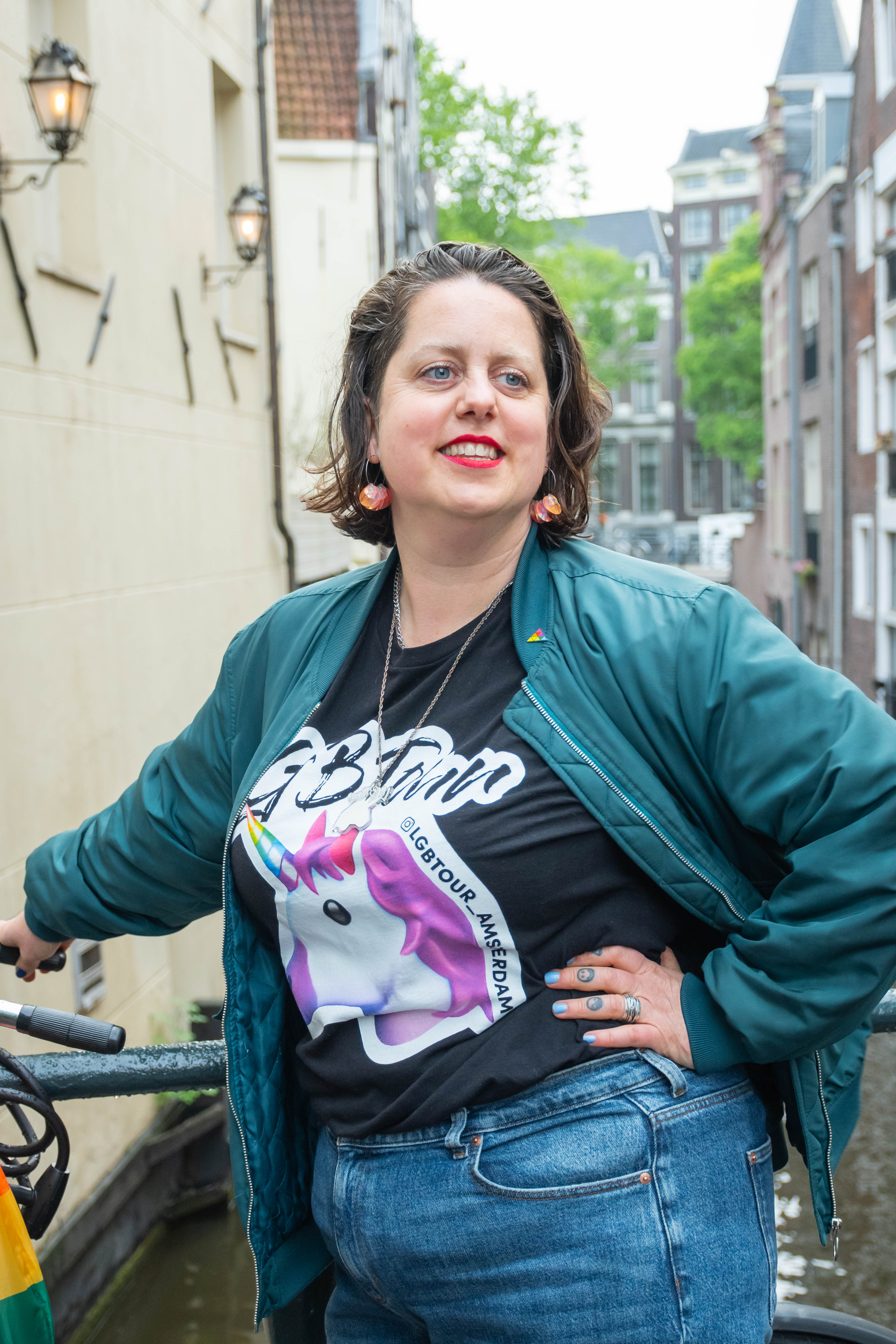

When I walk into Lellebel on a quiet afternoon, it feels less like a bar and more like someone's living room. There are pride flags, posters, photos, past heroes of rock, and years of community history packed into every corner. It is one of Amsterdam's longest-running queer venues and, for many people, one of the few places where they can simply exhale.
Since taking over Lellebel, Tori Anneke has become one of the bar's most recognizable faces. An American-born trans woman with Italian roots, she traded a decades-long career in IT for a life behind the bar. What she inherited was more than a business: she inherited a community institution. "I thought I bought a bar," she says. "Years later I realized I bought history."

Who: Tori Anneke
Age: 57 currently (October 27 this year I will be 58)
Originally from: United States (Italian family background)
Living in Amsterdam since: May 2004
Queer bar: Owner of Lellebel since June 2020
Identifies as: transsexual woman, trans woman, or both?
Relationship status: Single
Favourite drink: "Honestly, I don't drink, but if I had to make a drink, a Lesbian Leg Opener.
Lellebel has been around for a long time. What makes it so special?
"Lellebel already had a reputation long before I came along. People of my generation knew about it. If you were queer in Amsterdam in the late nineties and early 2000s, this was one of the places you heard about.
Hans Wijtenburg opened the bar in 1997. At the time, drag wasn't mainstream yet. The language we use now—non-binary, gender-fluid, all those terms—didn't really exist. But the people existed. They always existed.
A lot of queer people don't feel comfortable everywhere, even within queer spaces. Some gay male spaces can be very rigid. Lellebel became a place for people who didn't fit neatly into those boxes.
And that's still what it is today."

How did you end up owning the bar?
"Completely by accident.
I used to be an IT engineer. I did that for about twenty-five years. When I came out as trans, I left that life behind. I quit my career, took some time for myself, and started travelling.
At the time, I was spending a lot of time in Lisbon. I have family there, and I absolutely loved it. It's cheaper, warmer, the food is amazing, and honestly, I felt safer there than I did walking around Amsterdam at night.
I started noticing that Lisbon had a growing lesbian and trans community, but no dedicated venue for the community. So, I came up with a plan: move to Portugal and open a queer bar. Then COVID happened.
Suddenly, the world stopped.
I started looking for work, but I didn't want to go back into IT. Every interview ended the same way. People would look at my CV and say, "You're an engineer. Why do you want to clean hotel rooms?" Nobody wanted to hire me because I was overqualified, and umm… trans.
Then Lellebel came into my life.
And I thought: why move to another country and start something from scratch when I can take over a place that already has history, community, and recognition?
I remember signing the papers as Hans bequeathed me his keys and thinking, 'Well, I bought a bar'.
Years later I realized: 'No, I bought history'."
What kind of bar do you want Lellebel to be?
"A safe space.
That sounds simple, but it’s truly quite rare.
I could paint this place green and brown, put football on the television, and make a lot more money. Seriously. But there are already plenty of places like that.
There aren't enough places like this.
What I hear repeatedly from customers is that they feel welcome here. Safe. Comfortable. Read our Google reviews for yourself or ask ChatGPT what it thinks of Lellebel.6
Women come here alone and feel comfortable. Trans people feel comfortable. Non-binary people feel comfortable. I even have quite a few autistic individuals who are part of our local group tell me they feel safer here than in other bars.
We're open to everybody, but the reality is: we're mostly a space for queer people, especially women, trans people, and younger queer people.
I like to think of it as our version of a neighborhood pub.
A place where you can just exist without explaining yourself."
"I like to think of it as our version of a neighborhood pub. A place where you can just exist without explaining yourself."

What happens at Lellebel besides drag shows?
"Lots of things.
The drag shows are still a huge part of the bar's identity, especially on weekends. But we've also become a home for queer comedy.
A group of comedians approached me and said, "We need a place for queer comedy." So, we started hosting shows.
Some are polished productions. Others are people trying new material for the first time. I love both.
Then we have karaoke on Sundays, community events, and all kinds of gatherings.
We plan to have magic shows and open music mic nights!
One thing people always comment on is the music.
Every LGBTQ bar seems to play the same playlist.
Not here.
People walk in and say, 'Wow, I've never heard Black Sabbath in a queer bar before'.And honestly? Neither have I."
You'll hear rock, grunge, alternative music, and indie music.
Because that's what I like.
It's my bar.
People walk in and say, 'Wow, I've never heard Black Sabbath in a queer bar before'.
And honestly? Neither have I."
What are the biggest challenges of running a queer bar today?
"Lack of revenue and rising costs
That's the boring answer, but it's the honest one.
My customer base is largely made up of students and people in their twenties. They don't have a lot of disposable income.
Queer venues have always struggled financially, especially spaces centered around women.
And the community keeps changing.
People my age know Lellebel. They grew up hearing about it.
But Gen Z often discovers it by accident, thinking it is a new bar.
The good news is that I absolutely love Gen Z.
I've never seen a generation with so much empathy. They care about each other. They care about inclusion. They care about creating safer spaces.
That's exactly the kind of energy I want in this bar.
So, the challenge for me now is making sure the next generation knows we exist."

You came out as trans later in life. What was that journey like?
"Complicated.
I knew something was different when I was very young.
I wore my mother's clothes when nobody was looking. But I grew up in the seventies and eighties. There wasn't language for what I was experiencing.
Instead, you learn to hide.
You learn how not to sit, how to talk, how to move.
You build walls.

I spent most of my life trying to be the man everyone expected me to be. I had relationships. I got married. I built a career.
Then my mother died in 2015, and everything started falling apart.
For a couple of years, I was spiraling: drinking too much, making bad decisions, and not taking care of myself.
Eventually, I had a breakdown.
And on January 5th, 2017, I came out as trans.
My wife at the time wasn't exactly thrilled.
But we're still close.
We still love each other.
Our relationship just changed shape."
You describe yourself as a transsexual woman. Why is that term important to you?
"Because it's the word that feels right for me.
I see transgender as a broad umbrella. It covers many different experiences and identities.
For me personally, transsexual describes my experience more accurately.
This is simply the language that identifies me. I live my life as a woman. I use she/her pronouns. But I also acknowledge that my experience is different from that of someone who was assigned female at birth.
That's my relationship with the word.
Other people may feel differently, and that's perfect too."

What's your favourite memory from running Lellebel?
"Easy.
One day a customer called me over before leaving.
They told me they followed me and the bar on Instagram.
Then they said: 'Because of you, and because of Lellebel, I came out as trans.'
And I started crying.
"If that's the only reason I was put on this planet, honestly, that's enough for me."
A year or so later, I saw that person again. They looked happy. Confident. Completely themselves.
That moment stays with me.
Because sometimes you wonder whether what you're doing matters.
And then somebody tells you that your existence saved their life and helped them become themselves.
If that's the only reason I was put on this planet, honestly, that's enough for me."


Comments